

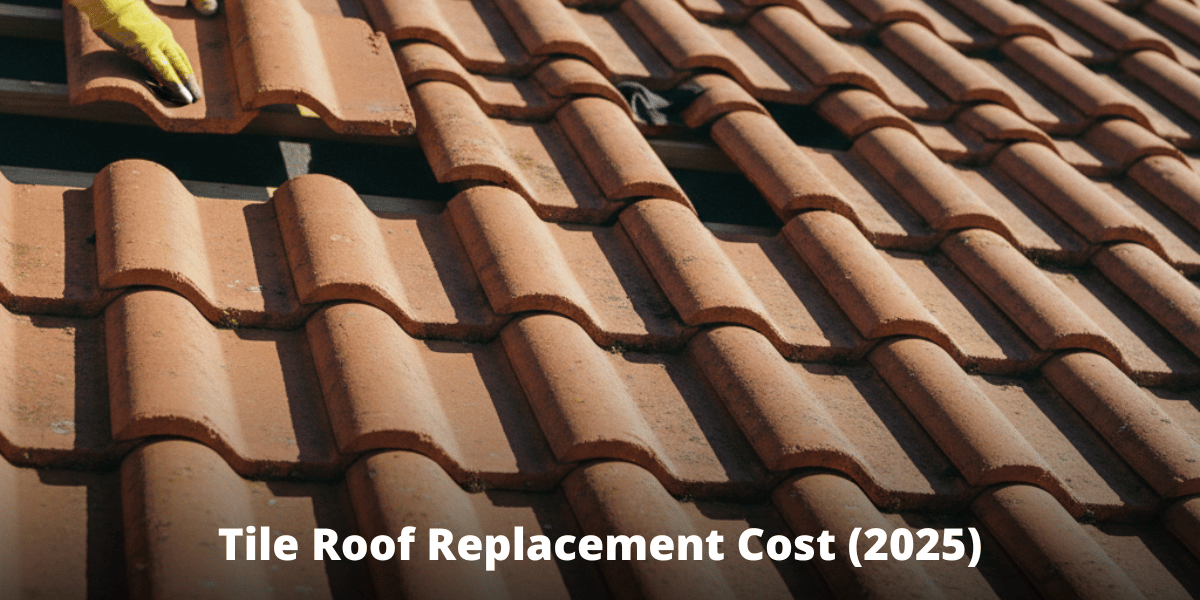
Tile roofs have a reputation for lasting decades, but when the time comes to replace one, the sticker shock can catch anyone off guard.
One quote says twenty grand, another says sixty, and suddenly you’re wondering what’s real. The truth is, tile roofs are as varied as the homes they protect.
We’ll break down tile roof replacement cost in 2025 – what you’re really paying for, and what’s worth it.
Key Notes
- National average $17,000-$32,000 installed; Wilmington runs $20,000-$35,000+ for coastal requirements.
- Concrete is the cheapest, while slate is the most expensive.
- Underlayment needs replacement every 20-30 years, even when tiles last 50+ years.
- Hidden costs include scaffolding, 15-20% tile breakage overage, and deck repairs.
Average Tile Roof Replacement Cost in 2025
Nationally, the average tile roof replacement cost in 2025 falls between $17,000 and $32,000, with most homeowners spending around $28,000–$32,000 for a standard-sized home.
Low-end projects (small roofs with basic concrete tiles) can start near $8,000, while large or high-end homes with premium terracotta or slate tiles can reach $75,000+.
Cost per square foot installed is usually between $7 and $25. That price includes materials, labor, tear-off, and disposal – but can climb higher for complex roofs, steep pitches, or luxury tile styles.
Cost By Roof Size
Because roofing costs are calculated by square footage, the total cost moves in lockstep with roof size.
Here’s what you can expect:
| Roof Size (sq. ft.) | Cost Range | National Avg. Cost |
|---|---|---|
| 1,000 | $7,000 – $25,000 | $16,000 |
| 1,500 | $10,500 – $37,500 | $24,000 |
| 2,000 | $14,000 – $50,000 | $28,000 |
| 2,500 | $17,500 – $62,500 | $32,000 |
| 3,000 | $21,000 – $75,000 | $38,000 |
For quick math: Multiply your roof size by the price-per-square-foot range (typically $7–$25) to get a reasonable estimate.
Cost By Material and Style
Tile roofs come in several materials – each with its own look, longevity, and price point.
| Material | Material Cost | Installed Cost | Highlights |
|---|---|---|---|
| Concrete | $2–$5/sq. ft. | $7–$19/sq. ft. | Most affordable; heavy; resists wind; may need sealing. |
| Clay | $3–$11/sq. ft. | $8–$25/sq. ft. | Classic look; long lifespan; great for warm climates. |
| Terracotta | $4–$15/sq. ft. | $9–$26/sq. ft. | Premium clay variant; fade-resistant; high-end aesthetic. |
| Slate | $5–$30/sq. ft. | $10–$45/sq. ft. | Longest-lasting (up to 200 years); very heavy; high cost. |
| Synthetic/ Composite | $7–$12/sq. ft. | $12–$26/sq. ft. | Lightweight, eco-friendly, coastal-compatible. |
Key takeaway: Concrete is the budget pick, clay balances value and longevity, and terracotta or slate sit at the premium end. Synthetic tile offers a modern twist – lighter and lower-maintenance but with a higher upfront cost.
Cost Breakdown: Labor vs Materials
Labor typically makes up 60% of the total cost, while materials account for the other 40%.
Tile roofs are labor-heavy because they require precision placement, weatherproof underlayment, and careful flashing.
Example: On a $30,000 project, expect around $18,000 for labor and $12,000 for materials. Complex roofs or high-pitch designs increase that labor share even further.
Line-Item Pricing You’ll See On Bids
A detailed contractor quote should include:
- Tile removal and disposal: $1–$5 per sq. ft.
- New underlayment installation: $2–$3 per sq. ft.
- Flashing, vents, ridge caps, sealants: $1,000–$3,000 total
- Permits and inspections: $200–$800 depending on city
- Cleanup and disposal: usually included, but check the fine print
If you don’t see these items listed individually, ask for a line-item breakdown – it’s the only way to compare quotes apples-to-apples.
Tile Roof Underlayment Replacement Cost
Underlayment is the waterproof layer beneath your tiles, and while tiles can last 50+ years, the underlayment usually needs replacing every 20–30 years.
Tile roof underlayment replacement cost runs about $1–$3 per square foot nationally, or $2–4 per sq. ft. in Wilmington due to coastal building requirements and humidity. That’s roughly $3,000–6,000 for a typical 1,500 sq. ft. home.
Underlayment options:
- Felt (tar paper): Cheapest; 15–30 year lifespan.
- Synthetic: Stronger tear resistance, lasts 25–50 years.
- Rubberized asphalt: Premium option; seals around fasteners, ideal for hurricane zones.
Replacing underlayment requires removing and reinstalling the tiles, which adds labor. Even though it’s only 10–15% of the total cost, it’s crucial for waterproofing and roof longevity.
Regional Reality Check: Wilmington, NC Costs
In Wilmington, tile roof replacement runs slightly higher than the national average. Expect to pay $20,000–35,000+ depending on tile type and home size. Per square foot, costs typically fall between $15–25.
Why higher? Coastal weather, salt air, and hurricane readiness.
Local Cost Drivers:
- Salt air corrosion means using stainless or coated fasteners.
- Codes require reinforced underlayment and hurricane-rated tie-downs.
- Skilled labor costs more due to specialization.
Best Materials For Wilmington:
- Concrete tiles: great value and good salt resistance.
- Glazed or coated clay tiles: resist UV and moisture.
- Synthetic composite tiles: lightweight, corrosion-proof, and ideal when structure weight is a concern.
Underlayment tip: Synthetic or peel-and-stick waterproof membranes outperform traditional felt in humidity and storms.
Hidden or Commonly Missed Costs
Even with a detailed quote, unexpected items can sneak in:
- Scaffolding or lifts: Required for steep or tall roofs.
- Tile breakage: Expect 15–20% overage for breakage and future replacements.
- Deck repair: Uncovered water damage adds carpentry hours.
- Permit fees: Mandatory in most NC counties.
- Weather delays: Coastal humidity and storms can push schedules.
Budget a 10% contingency for peace of mind.
Cost-Control Strategies
You can’t bargain with gravity or hurricanes, but you can save smartly:
- Get multiple quotes from certified tile specialists.
- Ask for alternate materials: Synthetic or coated concrete can reduce costs.
- Bundle services: Gutters or windows often qualify for better pricing.
- Finance instead of delay: 0% or low-interest financing options can help you avoid emergency replacements later.
- Schedule off-season: spring and fall often have better availability and rates.
Financing, Insurance, and Claims
Many homeowners use roof financing plans like:
- 0% interest for 36 months
- Low fixed-rate loans up to 15 years
If storm or hurricane damage is the trigger, your insurance may cover part or all of the replacement. Keep documentation (inspection reports, photos, and estimates) to simplify claim approval.
Thinking About A Tile Roof Upgrade?
Get expert, on-site advice tailored to your home and budget.
Frequently Asked Questions
Do tile roofs increase home value?
Yes. Tile roofs are seen as premium upgrades that boost curb appeal, energy efficiency, and resale value. Homes with tile roofing often appraise higher due to their long lifespan and low maintenance needs.
Can you install tile roofing over an existing roof?
Usually no. Tile roofing is heavy, so existing materials must be removed to inspect and reinforce the roof deck. Proper structural support is essential before installation to prevent sagging or damage.
How do I maintain a tile roof after replacement?
Schedule professional inspections every 2–3 years, keep gutters clear, and remove debris buildup that can trap moisture. Avoid walking on tiles – hire pros for cleaning or maintenance to prevent cracking.
Are tile roofs good for hurricane-prone areas?
Yes, when installed correctly. Tiles rated for high wind uplift and paired with reinforced underlayment and fasteners can perform exceptionally well in coastal climates like Wilmington’s.
Conclusion
Tile roofs are an investment that can easily outlast most other roofing systems – often 50 years or more when installed and maintained properly. But that longevity comes at a price that depends on factors like tile type, roof size, and underlayment quality.
In 2025, most homeowners will spend between $17,000 and $32,000 nationwide, with Wilmington projects often running higher due to coastal weatherproofing requirements.
Choosing durable materials like coated clay or concrete tiles, paired with a strong synthetic underlayment, can make all the difference in lifespan and protection.
If your roof is aging, showing leaks, or losing tiles, it’s worth getting a professional opinion. Book a free appointment to get a detailed inspection, transparent quote, and expert recommendations tailored to your home, tile type, and long-term budget.